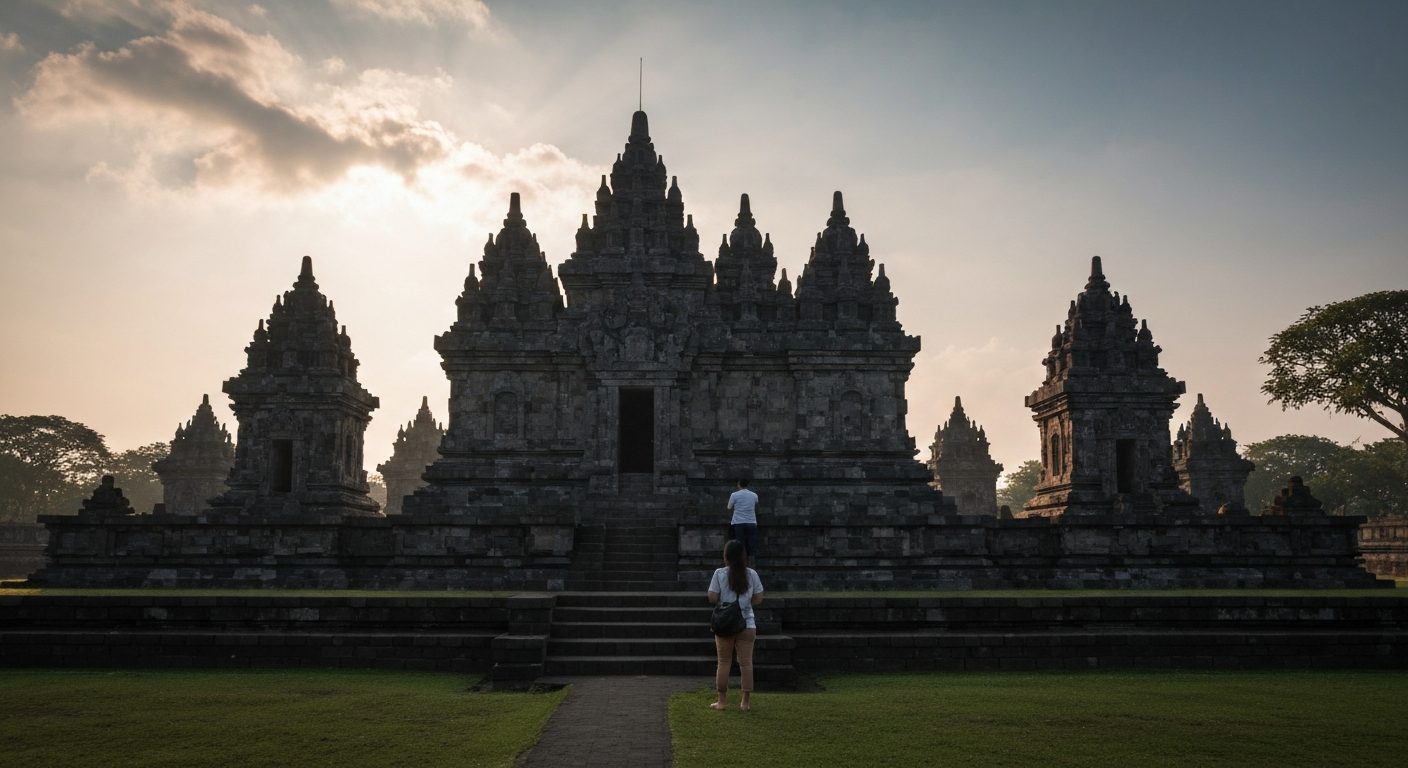
Is Yogyakarta safe for tourists? Yes — Yogyakarta remains one of Indonesia’s calmer, more welcoming cities, and most visits pass without any serious incident. The key is knowing a few local realities: where petty crime happens, how to handle transport and money, and how to stay healthy in a tropical climate.
As someone who plans Yogyakarta day-trips and multi-day routes every week, I spend a lot of time answering this exact question. Below is the same safety briefing I give our own guests — practical, unhurried and honest, so you can decide calmly and plan with confidence for 2026.
—
Overall Safety: How Yogyakarta Feels in 2026
Yogyakarta is a mid-sized Javanese city with a strong student population, a deeply rooted palace culture, and a very visible Islamic and Javanese etiquette. Daily life is orderly. Violent crime against foreigners is rare. Most issues tourists face are minor: overpaying for a ride, small scams around shops, or simple pickpocketing in crowds.
From our recent guests and on-ground guides’ reports:
- Walking in busy central areas (Malioboro, around the Kraton) is generally fine until about 10–11 pm.
- Families with children and older travelers usually comment more on traffic and crossing the street than on any feeling of threat.
- Solo women report more curiosity and small talk than harassment, especially if dressed modestly.
That said, Yogyakarta is still a real city. You’ll see traffic, scooters weaving through lanes, and the full range of urban life. Treat it with the same awareness you’d use in any unfamiliar Asian city, and you’ll likely find it easier-going than Jakarta, Bali’s southern beach strip, or many big capitals.
—
Is Yogyakarta Safe for Tourists? Key Risks in Plain Language
To answer “is Yogyakarta safe for tourists” properly, separate actual risk from background worry. Here are the main categories we brief guests on:
- Violent crime
- Very low for tourists; incidents are rare and usually make local news.
- Petty theft
- Moderate in crowded spots (Malioboro, stations, festival nights, Prambanan at sunset).
- Scams
- Light but persistent: detours to “art” or batik shops, inflated transport prices.
- Traffic & road safety
- The most significant everyday risk; helmets and seatbelts matter more than anything.
- Health & hygiene
- Tap water not potable; dengue fever risk rises in rainy season; usual tropical food hygiene issues.
- Natural hazards
- Merapi is an active volcano but monitored continuously; tours avoid restricted zones.
Our role at Prambanan Tours (operated by Bali Premium Trip) is to reduce all of these: private vehicles with seatbelts, vetted drivers and guides, pre-booked tickets, and clear guidance on what to ignore and where to say “no, thank you”.
—
Solo Female Traveler Safety in Yogyakarta
You’ll see many Indonesian women moving around Yogyakarta alone — students, professionals, shop owners — by day and early evening. For foreign women, the same broad pattern holds: the city is generally manageable with sensible habits.
Everyday experience
What our solo female guests most often report:
- Curious questions: “From which country?”, “Travel alone?” — usually friendly, sometimes repetitive.
- Occasional requests for selfies in tourist areas (you can decline politely).
- Very limited catcalling compared with many large cities; more likely stares that fade once you make eye contact or smile briefly.
Overt harassment is uncommon, and if it happens inside a business (hotel, café, shop), staff usually step in if you ask.
Practical safety tips for solo women
Use the same baseline as you might in a mid-level Asian city, plus a bit of cultural sensitivity:
- Dress slightly more modestly than at a Bali beach. Sleeves and knee-length shorts/skirts are fine; you don’t need a headscarf unless you enter certain religious spaces or prefer to.
- Avoid walking alone on very quiet streets late at night. In central areas, try to be back or in a busy café/bar by around 11 pm.
- Use registered taxis, hotel cars, or ride-hailing apps (Grab, Gojek) rather than hopping on random scooters at night.
- Share your live location with someone you trust if heading out solo after dark.
- In bars and cafés, keep your drink in sight and don’t leave your bag on the back of a chair near the street.
For day-touring, many solo women choose a private car and guide so they always have a known driver waiting at temple exits and rural stops. That’s standard in our itineraries; you can plan your trip with us via email or WhatsApp and we’ll build each day with this in mind.
—
Yogyakarta Tourist Scams: What to Avoid in 2026
Scams in Yogyakarta are generally small-scale and time-wasting rather than dangerous. Knowing the usual patterns helps you step aside early.
1. Becak / “Guide” detours to batik or “art” galleries
Around Malioboro, Taman Sari and sometimes near the Kraton, you may be approached by:
- A becak (pedicab) driver offering a “very cheap tour”.
- A friendly person who “just wants to practice English” and then suggests an art exhibition or batik gallery “today only”.
You’ll be taken to a shop with inflated prices and some pressure to buy. The driver or tout earns a commission. The batik is often printed, not hand-drawn.
How to handle it:
- If you want a ride, state clearly: “Direct to [place], no shops please.”
- Decline vague “art tours” or “exhibitions only today”.
- If taken to a shop you didn’t agree to, it’s fine to walk out and take a regular taxi or app-based car back.
Our guests avoid this entirely because our drivers take you point-to-point on a clear route without commission-based stops.
2. Inflated taxi or car fares
This is common at some arrival points if you don’t use official counters or apps.
- Always check if there is a fixed-fare taxi counter at the airport or station.
- If using a street taxi, insist on the meter or agree a fixed price before getting in.
- For longer transfers (e.g. airport to Borobudur area, or Yogyakarta–Solo), it’s often cheaper and simpler to book a car and driver for a half or full day.
As a reference, a full private car with driver for 10–12 hours around Yogyakarta in 2026 typically runs in the ballpark of US$45–80 (indicative only, varies by vehicle size and date), which is often better value than piecing together multiple one-way rides.
3. “Official guide” inside Kraton, Taman Sari, or temples
At some heritage sites, you’ll meet:
- People wearing informal badges, offering guiding services that sound official.
- Aggressive photo offers which turn into demands for high tips.
Yogyakarta’s palaces and temples do work with licensed local guides, but not everyone at the gate is one of them.
What helps:
- Check the official ticket window first for any posted guide fees or recommendations.
- Agree a total price for guiding before starting, not “pay as you wish”.
- If you’re already touring with us, your own vetted guide handles all entry and explanations, so you can just decline extras.
4. Money-changing and card skimming
Use ATMs inside banks or malls. Avoid street-front money changers with surprisingly good rates. Card skimming at random ATMs is an occasional issue in Indonesian cities.
- Choose ATMs attached to big banks or inside well-lit buildings.
- Cover the keypad and tug on any card-reader parts; if they feel loose, move on.
- Many travelers prefer to withdraw a reasonable amount once and pay cash for market and small purchases.
—
Pickpockets in Prambanan, Malioboro and Other Hotspots
Yogyakarta does not have the aggressive bag-snatching you’ll hear about in some big capitals, but crowds create opportunities for quiet theft.
Known hotspots:
- Malioboro Street in the evening, especially weekend and holiday nights.
- Prambanan Temple around sunset, concerts or Ramayana ballet nights, and at the exit shops.
- Busy markets and train stations at boarding time.
Simple habits usually solve this:
- Use a cross-body bag that zips; keep it in front of you in tight crowds.
- Keep passports and the bulk of your cash in the hotel safe; carry only what you need for the day.
- Don’t put your phone or wallet in a back pocket when riding a becak or walking through shoulder-to-shoulder crowds.
- If someone “bumps into” you or creates a commotion, instinctively check your bag.
On our Prambanan and Ramayana ballet evenings, your guide helps you navigate the entry and exit crowds and can suggest spots to wait that are quieter and better lit.
—
Is Tap Water Safe in Yogyakarta? Food & Drink Hygiene
Tap water and drinks
To answer directly: no, tap water in Yogyakarta is not safe for tourists to drink. Most locals don’t drink it either.
- Use bottled water or refill stations at your hotel/guesthouse.
- Brush your teeth with bottled or filtered water if you have a sensitive stomach.
- Ice in mid-range restaurants, hotels, and established cafés is generally made from filtered water; simple warungs vary.
If you’re sensitive or traveling with young children:
- Order drinks without ice in small roadside stalls if you’re unsure.
- Check that bottled-water seals are intact.
Is Yogyakarta street food safe for tourists?
Food is one of Yogyakarta’s joys. Street food ranges from very simple warungs to long-running vendors that generations of locals trust. The question is less “safe or not” and more “which stalls and how to ease yourself in”.
Practical guidelines:
- Follow the queues. A busy stall with high turnover is almost always safer than a quiet one, even if it looks more basic.
- Watch how food is handled. Separating raw and cooked items, using tongs instead of bare hands for ready-to-eat food, reheating to piping hot — these are good signs.
- Start gently. Try cooked dishes first (satay, fried rice, gudeg, bakmi) rather than raw salads or sauces that have been sitting out for hours.
- Carry basic stomach medicine if a change of diet tends to upset you. For anything serious or persistent, see a doctor; this guide is not medical advice.
On our food-focused evenings, our guides steer guests toward vendors they personally frequent and avoid spots that look tired or poorly handled.
—
Dengue Fever and Rainy Season Risk in Yogyakarta
Dengue is present across much of Indonesia, including Yogyakarta. It is spread by daytime-biting mosquitoes, especially in and just after the rainy season.
When is the higher-risk period?
- Rainy season: generally November to March, with variations year by year.
- Higher dengue risk: tends to coincide with periods of consistent rain and standing water, particularly in urban neighborhoods.
Many travelers visit during these months and have no problems, but it’s sensible to lower your risk:
- Use mosquito repellent during the day as well as at dusk and dawn.
- Wear light long sleeves and trousers in garden areas and rural villages.
- Choose accommodation that has screens or air-conditioning, so you’re not sleeping with open windows and no nets.
- Empty or avoid areas of standing water around your room’s balcony or garden if possible.
For any vaccinations, prophylaxis, or if you’re pregnant, immunocompromised, or traveling with very young children, please talk to your doctor or a travel-health clinic at home before your trip; they can give tailored medical advice for your situation.
If you develop a high fever, severe headache, or unusual body pain during or after your stay, seek medical care promptly and mention that you’ve been in a dengue area.
—
Is Prambanan Temple Safe to Visit?
Prambanan is one of Yogyakarta’s safest “big-ticket” sights, and hundreds of local school groups and families visit alongside international travelers every day.
Safety considerations fall into three main areas: crowds, heat, and surfaces.
1. Crowds and movement
- Peak crowd times: late afternoon toward sunset, most weekends and Indonesian public holidays.
- Steps into some temple courtyards are narrow and uneven; walk slowly, hold the handrail where present, and let groups pass rather than rush.
For parents:
- Keep children within arm’s reach on stairways and inner temple corridors.
- Choose a visible meeting point (e.g. a particular information board) in case you get separated.
2. Heat and sun exposure
Prambanan’s main compound has limited shade.
- Midday temperatures regularly sit above 30°C (86°F) with direct sun on the stones.
- Hats, sunscreen and plenty of water are essential. Many visitors underestimate this and feel unwell halfway through.
Our guests often opt for:
- Morning visits starting around opening time, or
- Late-afternoon visits arriving a couple of hours before sunset, combined with the evening Ramayana ballet on selected nights.
Both avoid the harshest heat and leave time to rest.
3. Earthquake and volcanic safety
Central Java is seismically active. You’ll see that some temples, including Prambanan, have restoration works and safety cordons. The good news:
- Prambanan is managed by state agencies that monitor structural safety.
- In the rare event of an earthquake, follow staff instructions and move to open ground away from structures.
Merapi’s activity does not usually affect Prambanan directly; tours operate only when local authorities deem it safe.
—
Merapi Lava Jeep Tours: Fun but Sensible Precautions
Merapi lava jeep tours are a highlight for many visitors, especially sunrise and morning runs.
From a safety angle:
- Tours operate outside restricted zones and are suspended if volcanic alert levels change.
- Jeeps are generally open-air with simple seatbelts; older guests may prefer the front seat for easier access and less jostling.
- The track is bumpy and dusty. People with back or neck issues, or late pregnancy, should consider carefully and ask their doctor beforehand.
Practical tips:
- Bring a mask or buff to cover your nose and mouth from dust.
- Wear closed shoes — volcanic gravel gets under sandals easily.
- Hold bags securely; don’t rest phones or cameras loosely on your lap.
We work only with licensed Merapi operators and adjust or cancel the jeep portion if conditions or alerts change, then rearrange the day accordingly.
—
Traffic, Transfers and Road Safety
The most consistent real risk in Yogyakarta is road-related, not crime.
Inside the city
- Scooters are everywhere and often pass on both sides.
- Pedestrian crossings exist but are not always respected; cross slowly and predictably, ideally with locals.
Inter-city and day-trip driving
- Roads to Borobudur (about 1.5–2 hours each way by car, depending on traffic) and Prambanan (roughly 45–60 minutes from many city hotels) are paved but busy.
- Night driving in rural areas has fewer streetlights and more trucks.
Our approach:
- Use private vehicles with seatbelts and experienced drivers.
- Plan day-trip routes that avoid rush-hour choke points where possible.
- Build in rest and meal stops, especially for families with children and older travelers.
—
Money, Documents and What to Carry Day-to-Day
To feel secure without overloading yourself:
- Carry: one bank card, enough cash for the day, a copy or photo of your passport, and your hotel’s business card or address.
- Leave in the safe: passports, spare cards, the bulk of your cash, and high-value items you don’t need.
Indicative daily spend, as of June 2026:
- Simple local meal: US$2–5 per person.
- Café or mid-range restaurant main course: US$5–12.
- Bottled water: under US$1 in shops.
Private full-day touring with car, driver, and guide across Yogyakarta, Prambanan and/or Borobudur typically falls somewhere around US$120–250 per day for two people (very rough, varies by season, exact inclusions, and type of hotel transfers). That’s not a quote — just a ballpark so you can sense what’s realistic.
—
How a Private, Guided Trip Improves Yogyakarta Travel Safety
Many of the issues described above — scams, overpaying, getting disoriented in crowds — become far less likely with a thoughtful itinerary and a calm local presence at your side.
With Prambanan Tours, operated by Bali Premium Trip, you:
- Book directly with our Bali-based reservations team, at transparent published rates, without third-party markups.
- Travel in private, air-conditioned vehicles with vetted drivers and seatbelts.
- Are met by licensed Yogyakarta guides we’ve worked with and reviewed continuously, not random touts at the gate.
- Have all tickets, time slots and temple permits arranged in advance through official channels, so you’re not scrambling or relying on “fixers”.
- Get frank advice on pacing — for example, doing Borobudur and Prambanan on different days if you prefer a slower tempo, or combining them if time is tight and you’re ready for a full day.
If you’d like us to build a safe, relaxed Yogyakarta plan around your dates and interests, you can plan your trip with our team via email or WhatsApp. We’ll walk you through options, risks and practicalities without any pressure to “upgrade”.
—
Final Thoughts: Calm, Aware, and Ready for 2026
So, is Yogyakarta safe for tourists in 2026? For most visitors — including families and solo travelers — the answer is yes, provided you combine normal city awareness with a few tropical-health basics.
The city’s rhythm is gentle, the heritage sites are well-managed, and locals tend to be quietly protective of guests. Your main tasks are simple: protect yourself from sun and mosquitoes, drink safe water, keep your valuables zipped away in crowds, and be cautious with too-good-to-be-true offers.
If that still feels like a lot to think about, you don’t have to manage it alone. Our Bali Premium Trip reservations desk and on-ground Yogyakarta team can handle the logistics, brief you clearly, and be on-call during your stay. Send us a message and we’ll help you plan your trip and your safety around the experiences you’re excited about — from Prambanan sunsets and Merapi mornings to quiet palace courtyards and street food evenings.
—
FAQs: Yogyakarta Travel Safety 2026
Is Yogyakarta safe for solo female travelers?
Yes, many solo women travel comfortably in Yogyakarta, especially around central areas and major sights. Use common-sense precautions: modest clothing by local standards, avoiding very quiet streets late at night, using registered taxis or ride-hailing apps after dark, and keeping valuables secure. Many solo female guests choose private day tours with a trusted driver and guide for added reassurance.
Is it safe to walk around Malioboro at night?
Malioboro is generally safe in the early evening and can be lively with families, students and street vendors. Petty theft is the main risk, especially on crowded weekend nights. Keep bags zipped and in front of you, avoid displaying expensive jewelry or large cameras in very dense crowds, and use a taxi or ride-hailing car back to your hotel if it’s late or you feel tired.
Is tap water safe in Yogyakarta hotels?
No, tap water in Yogyakarta is not considered safe for drinking, even in hotels. Most properties provide bottled water in rooms or filtered water dispensers. Use this for drinking and, if you have a sensitive stomach, for brushing your teeth. Hot drinks and food cooked with tap water are usually fine, as the water is boiled.
How serious is the dengue fever risk in Yogyakarta?
Dengue is present in Yogyakarta, with higher risk in and just after the rainy season (roughly November to March). Many visitors never encounter it, but you should still reduce mosquito bites with repellent, long sleeves in green areas, and screened or air-conditioned rooms. For medical advice, vaccinations or specific concerns (such as pregnancy or chronic illness), speak to a doctor or travel-health clinic before your trip.
Is it safe to visit Prambanan and Borobudur with children?
Yes, families visit both temples every day. The main safety points are heat, hydration, and supervising children on uneven steps and narrow stairways. Visit in the morning or late afternoon to avoid midday sun, bring hats and water, and keep little ones close near steep or crowded areas. A private guide can help set an easy pace and suggest safer routes and rest points.