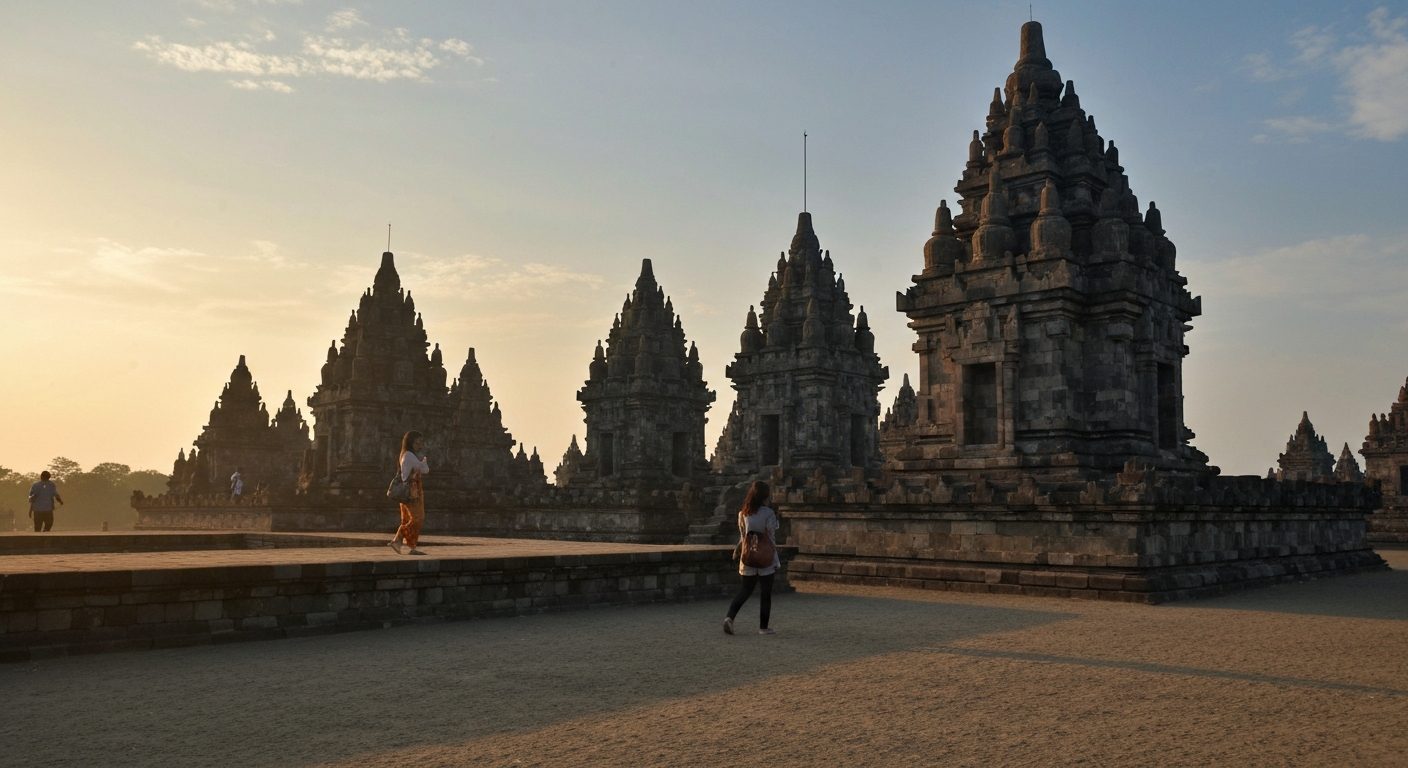
For your prambanan temple first time visit, understanding a few key practicalities and cultural norms will greatly enhance your experience. This guide offers essential “know before you go” advice, ensuring your exploration of Prambanan and other Yogyakarta cultural sites is both respectful and rewarding.
Having walked the paths of Prambanan, Borobudur, and the Kraton for over a decade, I’ve seen countless visitors arrive, some prepared, some not. My aim here is to share insights from the ground — lessons learned from temple guides and palace abdi dalem — to help you navigate Yogyakarta’s heritage with quiet confidence, making your first visit smooth and meaningful.
Navigating Prambanan Temple for the First Time
Prambanan is not just a collection of temples; it is a sprawling complex of Hindu sanctuaries dedicated to the Trimurti: Brahma, Vishnu, and Shiva. Its scale can surprise first-time visitors, so a little preparation goes a long way.
What to Expect at Prambanan
Prambanan is the largest Hindu temple complex in Indonesia, built in the 9th century. The main complex features three towering temples dedicated to the great gods, surrounded by smaller shrines and the remains of hundreds of perwara (ancillary) temples. The central Shiva temple, reaching approximately 47 meters (154 feet) high, is particularly striking. Prepare for a lot of walking on uneven ground and stairs. The sheer artistry of the stone carvings, depicting scenes from the Ramayana epic, is a highlight.
Best Time to Visit Prambanan Temple
Timing your visit can make a significant difference to your comfort and the overall atmosphere.
- Early Morning (Opening Time to 9:00 AM): This is consistently the best time to visit Prambanan temple. You’ll beat the intense mid-day heat and the largest tour groups. The light for photography is softer, and the air is cooler. Watching the sunrise cast its glow over the ancient stone is a serene experience.
- Late Afternoon (3:00 PM to Closing): Another excellent option. As the day cools, the crowds thin out, and the temples take on a golden hue. This is also ideal if you plan to stay for the Ramayana Ballet performance, which typically starts after sunset.
- Mid-day (10:00 AM – 2:00 PM): This period is usually the hottest and busiest. While still impressive, the heat can be draining, and navigating through large groups can detract from the contemplative atmosphere. If you must visit during these hours, focus on staying hydrated and seeking shade where possible.
Prambanan Temple Dress Code: What to Wear
Understanding the prambanan temple dress code is straightforward and respectful. As a sacred site, modest attire is expected.
- Shoulders and Knees Covered: This is the primary requirement. Both men and women should wear clothing that covers their shoulders and knees. This means t-shirts, polo shirts, or blouses are fine, but sleeveless tops, tank tops, or spaghetti straps are not. For bottoms, long trousers, capri pants, or skirts/dresses that reach below the knee are appropriate.
- Sarongs Provided: Don’t worry if you arrive and realize your attire isn’t quite right. At the entrance to Prambanan, visitors are typically provided with a sarong to wear over their clothes if needed. This is a common practice at many temples in Indonesia. While they are provided, bringing your own lightweight sarong or scarf is always a good idea for convenience and personal preference.
- Comfortable Footwear: You will be doing a lot of walking, often on uneven stone paths and up temple stairs. Comfortable walking shoes or sturdy sandals are essential. Flip-flops might be less suitable for the extensive walking and climbing involved.
Footwear and Photography Rules at Prambanan
- Footwear: There are no specific rules about removing shoes at Prambanan, unlike some other temples. However, given the walking involved, practical footwear is key.
- Photography: Photography is generally permitted throughout the complex. Drones might require special permits obtained in advance from the temple management. Always be respectful of other visitors and do not climb on the temple structures for photos. Avoid using flash inside dimly lit areas if you encounter any.
Cultural Etiquette Beyond Prambanan
Yogyakarta is the heart of Javanese culture, and respecting local customs extends beyond the temples. Understanding general yogyakarta cultural etiquette will enrich your interactions and demonstrate appreciation for your hosts.
Cultural Etiquette at the Kraton Yogyakarta
The Kraton (Sultan’s Palace) is a living museum and the official residence of the Sultan of Yogyakarta. It is a place of deep cultural significance and requires a slightly different approach than the temples.
- Dress Code: Similar to temples, modest attire is expected. Shoulders and knees should be covered. While sarongs are sometimes offered, it’s best to arrive appropriately dressed.
- Quiet Demeanor: Maintain a respectful and quiet demeanor. The Kraton is not just a tourist attraction; it’s a functioning palace and a spiritual center.
- Photography: Photography is generally allowed in most public areas, but always look for signs or ask a staff member if unsure. Some specific areas, particularly those used for private ceremonies or housing sacred objects, may prohibit photography.
- Interaction with Abdi Dalem: You will encounter abdi dalem (palace servants), who often wear traditional Javanese attire. They are integral to the palace’s function and heritage. A polite smile and a soft greeting are appreciated. If you wish to ask a question, do so respectfully.
- Removing Shoes: In some specific inner halls or areas within the Kraton, you might be asked to remove your shoes before entering. Observe what others are doing, or follow any signs.
Taman Sari Water Castle Dress Requirements
Taman Sari, the former royal garden and bathing complex, is a fascinating site with a more relaxed atmosphere than the Kraton, but basic modesty still applies.
- Dress Code: The taman sari water castle dress requirements are generally less stringent than Prambanan or the Kraton, but it’s still best to dress modestly. Covering shoulders and knees is recommended. Casual, comfortable clothing is fine, but avoid overly revealing attire out of respect for the site’s historical and cultural significance.
- Footwear: Comfortable walking shoes are advisable as you’ll explore various courtyards, bathing pools, and underground passages.
- Photography: Photography is generally permitted throughout Taman Sari.
General Cultural Etiquette in Yogyakarta Temples and Sacred Sites
- Speaking Volume: Keep your voice low, especially inside temples or during cultural performances.
- Pointing: When pointing, use your whole hand rather than just a finger, or better yet, gesture with your chin.
- Touching Heads: Do not touch people’s heads, as the head is considered sacred.
- Left Hand: The left hand is traditionally considered unclean in many parts of Indonesia. Try to use your right hand when giving or receiving items, or when shaking hands.
- Removing Shoes: At some smaller, active temples or mosques, you will be expected to remove your shoes before entering. Look for shoe racks outside the entrance or observe locals.
What to Wear Yogyakarta Temples
To summarize what to wear yogyakarta temples:
- Women: Long skirts or trousers, dresses covering knees, t-shirts, blouses, or shirts covering shoulders. A lightweight scarf is versatile for extra coverage.
- Men: Long trousers or shorts that cover the knee, t-shirts, polo shirts, or shirts.
- Children: Generally, the same principles of modesty apply, but there’s a bit more leniency for very young children.
- Avoid: Tank tops, sleeveless tops, short shorts, mini-skirts, excessively tight or revealing clothing.
Practicalities for Yogyakarta First-Timers
Beyond cultural etiquette, a few practical considerations can smooth out your first trip to Yogyakarta. These yogyakarta tips for first timers focus on comfort and enjoyment.
Pacing Your Visit: Don’t Over-Schedule
Yogyakarta offers a wealth of experiences, but trying to cram too much into a single day can lead to exhaustion and rushed encounters.
- Focus on Depth, Not Breadth: For a prambanan temple first time visitor, dedicating ample time to Prambanan itself, perhaps combining it with a relaxed visit to the Kraton or Taman Sari on a separate half-day, is more rewarding than attempting multiple major sites in one go.
- Allow Travel Time: Traffic in Yogyakarta can be unpredictable. Factor in travel time between sites, especially if you’re traveling during peak hours.
- Heat Management: The tropical heat and humidity are constant factors. Schedule indoor activities or breaks during the hottest parts of the day. Early mornings are your best friend for outdoor exploration.
Staying Hydrated and Sun Protection
The tropical climate requires constant vigilance against dehydration and sun exposure.
- Drink Water Constantly: Carry a reusable water bottle and refill it whenever possible. Bottled water is widely available.
- Sunscreen and Hat: Apply high-SPF sunscreen regularly, even on cloudy days. A wide-brimmed hat and sunglasses are indispensable.
- Lightweight Clothing: Wear light-colored, breathable fabrics like cotton or linen to help stay cool.
Indicative Entry Ticket Pricing (Last Verified June 2026)
Entry fees for major attractions are generally paid in Indonesian Rupiah (IDR) but can be approximated in USD for convenience. Prices can fluctuate and may vary based on exchange rates, specific events, or whether you purchase a combo ticket.
- Prambanan Temple:
- Adult foreigner: US$20-30 (IDR 300,000 – 450,000)
- Child foreigner: US$10-15 (IDR 150,000 – 225,000)
- Note: Combo tickets for Prambanan and Borobudur are sometimes available, offering a slight discount.
- Kraton Yogyakarta (Sultan’s Palace):
- Adult foreigner: US$1-2 (IDR 10,000 – 15,000)
- Taman Sari Water Castle:
- Adult foreigner: US$1-2 (IDR 10,000 – 15,000)
These are indicative ranges only. Always check the official sites for the most current pricing.
Summary of Dress Code Requirements for Key Sites
For clarity, here’s a quick reference on what to wear:
- Prambanan Temple
- Shoulders & knees covered. Sarongs provided if needed. Comfortable walking shoes essential.
- Kraton Yogyakarta
- Shoulders & knees covered. Quiet demeanor. May need to remove shoes in specific inner halls.
- Taman Sari Water Castle
- Modest attire recommended (shoulders & knees covered). Comfortable walking shoes.
Considering a Private Guided Tour
While independent exploration is possible, a private guided tour can transform your yogyakarta first-time experience. Our experienced local guides offer invaluable context, bringing the ancient stones and palace traditions to life. They handle all logistics, from comfortable transfers to navigating ticket counters, allowing you to focus entirely on the experience. A typical full-day private tour, covering multiple key sites with a dedicated guide and driver, might range from US$150-300 per person, depending on the itinerary, group size, and vehicle type. These tours usually last 8-10 hours. This pricing is indicative and was last verified in June 2026.
Ready to explore Yogyakarta with ease and expert insight? Plan your trip with us today. Our team at Bali Premium Trip can craft a personalized itinerary that covers Prambanan, the Kraton, Taman Sari, and more, ensuring a seamless and enriching cultural journey.
Frequently Asked Questions
Is it safe for first-time visitors to travel around Yogyakarta independently?
Yogyakarta is generally very safe for tourists. Locals are friendly and accustomed to visitors. However, like any travel destination, it’s wise to be aware of your surroundings, especially at night, and to keep valuables secure. Using reputable transport services and being mindful of basic safety precautions will ensure a smooth trip.
Can I combine Prambanan and Borobudur temples in one day?
While it is physically possible to visit both Prambanan and Borobudur in a single day, it makes for a very long and rushed experience. Both sites are vast and deserve ample time for exploration and appreciation. If time is limited, prioritize based on your interest (Hindu vs. Buddhist). For a more relaxed pace, it’s recommended to dedicate separate days or at least separate half-days to each.
What is the best way to get around Yogyakarta?
For first-time visitors, private car hire with a driver is the most comfortable and efficient way to explore, especially for visiting sites outside the city center like Prambanan and Borobudur. Ride-hailing apps (like Grab or Gojek) are readily available for shorter distances within the city. Becaks (cycle rickshaws) and andongs (horse-drawn carriages) are charming for short rides in specific tourist areas like Malioboro, but less practical for extensive sightseeing.
Are there food and drink options available at Prambanan Temple?
Yes, there are several cafes and stalls near the entrance and within the Prambanan complex where you can purchase snacks, drinks, and simple meals. It’s always a good idea to carry some water, but you won’t be without options for refreshments.
What if I forget to bring appropriate clothing for the temples?
Don’t worry. As mentioned, sarongs are typically provided at the entrance to Prambanan if your clothing doesn’t meet the modesty requirements. For other sites like the Kraton or Taman Sari, while sarongs might not always be offered, the dress code is often less strictly enforced than at Prambanan, but modesty is still appreciated. It’s always best to pack a lightweight scarf or sarong as a versatile item for your trip.
Planning your cultural exploration of Yogyakarta should be exciting, not daunting. Let our dedicated team at Bali Premium Trip handle the intricacies of your itinerary. We provide honest, research-backed guidance and arrange private, expert-guided trips with licensed local guides, ensuring your journey through Prambanan, the Kraton, and beyond is truly enriching. Contact us via WhatsApp or visit our plan your trip page to start crafting your personalized Yogyakarta adventure.