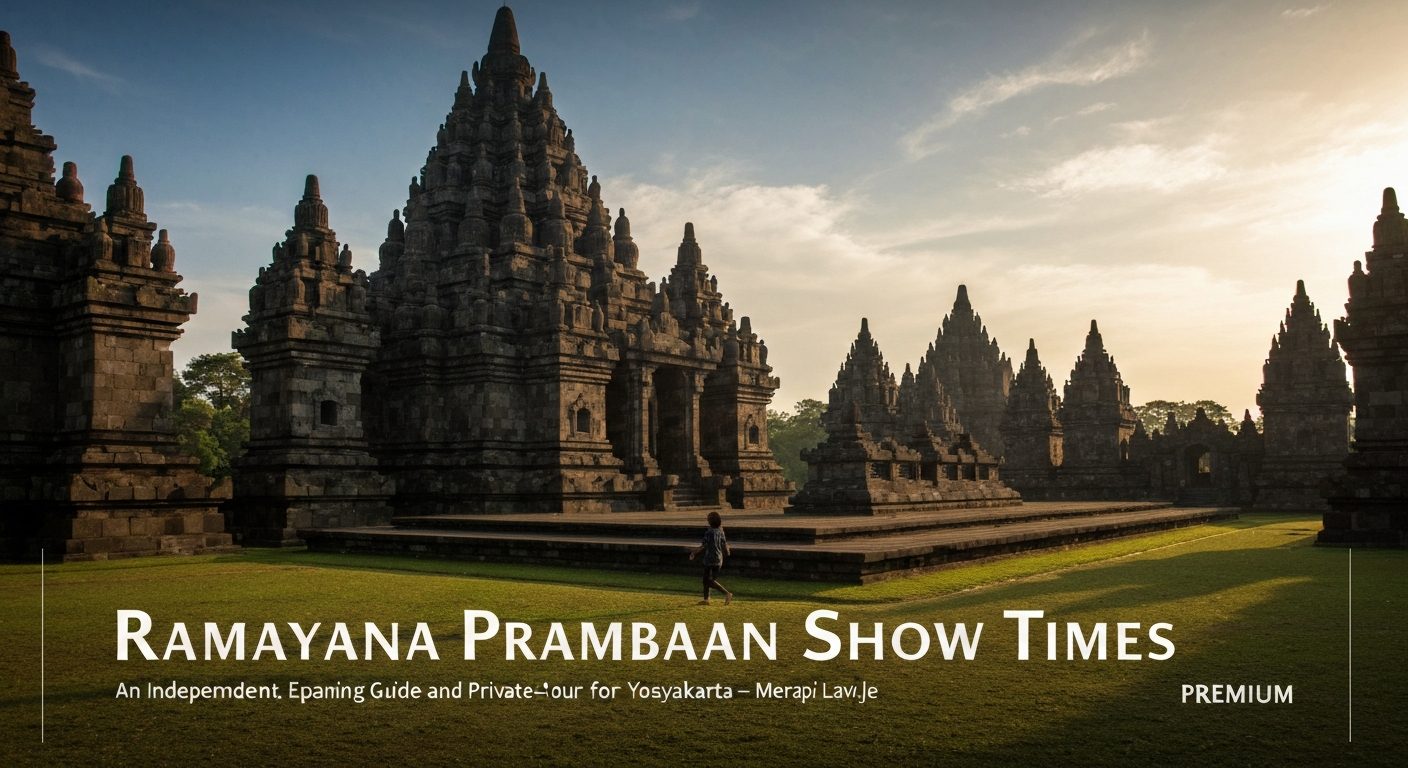
Ramayana Ballet Prambanan show times follow a simple pattern: the outdoor open-air theatre usually runs May–October, while the indoor Trimurti Theatre runs year‑round, with evening shows most Tuesdays, Thursdays and Saturdays. The main thing to decide first is which season you’re visiting, because that determines whether you watch under the shadow of Prambanan’s temples or in the covered indoor hall.
As someone who has sat through this performance more times than I can sensibly admit, I’ll walk you through how it really works now: schedule, ticket classes, how long it lasts, and how to pair it with a Prambanan sunset and dinner without feeling rushed.
—
What is the Ramayana Ballet at Prambanan?
Ramayana Ballet Prambanan (Sendratari Ramayana) is a Javanese dance-drama retelling the Ramayana epic using movement, expression and gamelan music rather than spoken dialogue.
You’ll see:
- A live Javanese gamelan orchestra
- Dozens to over a hundred dancers on busy nights
- Wayang (shadow-puppet) style characters, acrobatics and fire scenes
- Projected backdrops or temple silhouettes, depending on the stage
There are actually two main experiences:
- Open-air Ramayana Ballet – outdoor theatre facing Prambanan’s illuminated temples (dry season only, weather permitting).
- Indoor Ramayana Ballet at Trimurti Theatre – covered, air‑conditioned theatre that runs all year and during rain.
The story is the same Ramayana you may know — Rama, Sita, Hanuman, the golden deer, the burning of Alengka — but told in a uniquely Central Javanese way.
—
Ramayana Ballet Prambanan Show Times & Seasons
This is the first thing to check before planning your evening.
Open-air vs indoor seasons
The organiser switches between the Prambanan open air theatre and the Trimurti indoor stage depending on the time of year and the weather.
As of the last full season we reviewed (verified June 2026), the pattern is roughly:
- May to October (dry season)
- Main shows at the Prambanan open air theatre on most Tuesdays, Thursdays and Saturdays.
- The temples are lit behind the stage — this is the “classic” Ramayana Ballet Yogyakarta image you often see.
- November to April (rainy season)
- Shows move mainly to the indoor Trimurti Theatre, next to the open-air venue.
- The indoor stage is also used on any rainy evening in the so‑called “dry” months.
Smaller variations happen for special events, holidays or maintenance, so treat this as a framework, not a rigid rule.
Typical show days and times
The Ramayana ballet performance schedule times usually follow:
- Show days:
- Most Tuesdays, Thursdays, Saturdays (sometimes extra nights during local holiday peaks).
- Start time:
- Around 19:30–20:00 (7.30–8pm).
- Ramayana ballet duration:
- Around 1.5–2 hours, depending on format and intermission.
Indoor shows sometimes start slightly earlier than open‑air. During Ramadan or major holidays, times may shift.
Because slots do change, we always re‑confirm the ramayana ballet prambanan tickets schedule directly with the organiser before booking seats for our guests.
If you’d like us to check your travel dates, you can plan your trip with our Bali Premium Trip reservations team via email or WhatsApp and we’ll verify the exact schedule before locking in tickets and transfers.
—
Performance Formats: Full Show vs Four-Night Series
Not every night is the same production. This often surprises first‑time visitors.
Full story (all episodes in one night)
- Format: The entire Ramayana story condensed into a single evening.
- Where: Most commonly on open-air nights in high season, but can also be staged indoors.
- Duration: Around 2 hours including intermission.
- For: First‑time visitors and families who want the complete arc in one sitting.
You’ll see the key scenes: the golden deer, Sita’s abduction, Hanuman in Alengka, the burning of the city, and the final reunion.
Four‑night episodic version
Traditionally, the ballet can be broken into four episodes:
- Episode I – Rama’s Exile & Golden Deer
- Episode II – Sita’s Abduction
- Episode III – Hanuman’s Mission to Alengka
- Episode IV – The Great Battle & Reunion
These are usually scheduled in rotation across weeks — for example, every Tuesday might be Episode I, Thursday Episode II, and so on, then repeating.
- For: Repeat visitors, Ramayana enthusiasts, or those staying several nights in Yogyakarta.
- Note: Most short-stay travellers prefer the full story in one evening.
When we plan a visit, we’ll check which format runs on your dates and match it to your interest and patience level — children, in particular, do better with the one‑night condensed version.
—
Ticket Classes & Seating: VIP to Second Class
Ramayana Ballet Prambanan tickets are sold in several seating tiers. Names may be slightly different by season, but the structure is similar:
Common seating categories
- VIP Seating
- Padded chairs with the most central view.
- In the open-air theatre, these are usually in the front middle section.
- In Trimurti, they’re the first few central rows.
- Special / Executive Class
- Also good seats, slightly behind or to the side of VIP.
- Comfortable chairs, still with a strong view of the action.
- First Class
- Further back or more to the side.
- Still individual seats but with less centre‑stage alignment.
- Second Class
- Back or far side sections, sometimes partially bench‑style outdoors.
- Best if you are price‑sensitive and mainly want to be in the atmosphere.
For most travellers, we recommend VIP or Special — not because the dance is different, but because:
- The story is easier to follow from a clear central view.
- You’re less affected by people standing up or using phones.
- Sound and light feel more immersive.
Indicative ticket price ranges
Prices vary by stage (indoor vs open‑air), day of week, and occasionally by episode or special event. As a broad guide (last cross‑checked June 2026):
- Second Class: roughly US$15–25 per person
- First Class: roughly US$20–35 per person
- Special / Executive: roughly US$30–45 per person
- VIP Seating: roughly US$40–60 per person
These are indicative only and converted from rupiah; actual ticket windows quote in IDR and can change with season, the rupiah exchange rate and organiser policy.
We book directly from the official organiser at their published rates. Our role at Bali Premium Trip is to coordinate your preferred class, theatre (indoor vs open‑air), and transfers in one place, not to add a hidden markup.
—
Open-Air Theatre vs Trimurti Indoor Stage
Both venues tell the same story. The feel of the night, though, is quite different.
Prambanan Open Air Theatre (dry season)
- Season: Mainly May–October, plus any particularly dry shoulder-season nights.
- Capacity: Around 1,000+ seats across all classes.
- Setting: The stage is aligned so you see Prambanan’s lit Shiva, Brahma and Vishnu temples behind the dancers.
- Weather: No roof; shows can be moved indoors if rain threatens.
Pros:
- That sense of sharing a Javanese legend with the temples in your eyeline.
- Cooler night air, especially pleasant after a hot day.
- Fire scenes and Hanuman’s leaps feel grand against the darkness.
Cons:
- If wind picks up, it can be a little chilly for small children.
- Sound can be slightly more diffused than indoors.
- Your experience depends more on weather.
Trimurti Indoor Theatre (year‑round)
- Season: All year, but especially November–April and on rainy evenings.
- Capacity: Slightly fewer seats than open-air, but still several hundred.
- Setting: Proscenium stage with lighting rigs, projected backdrops and controlled acoustics.
- Comfort: Fully roofed, typically fans or air‑conditioning.
Pros:
- Rain-safe; the performance can proceed even in heavy showers.
- Better controlled lighting and sound; gamelan feels closer.
- Comfortable for families with younger children or older parents.
Cons:
- You don’t see the actual Prambanan temples during the show.
- Less “under the stars” sensation that many visitors associate with the Ramayana ballet Yogyakarta experience.
If this is your first and possibly only visit and you’re travelling in dry season, I’d lean gently towards the open-air theatre. In rainy months or if you dislike sitting outdoors at night, Trimurti is a very good alternative.
—
How to Book Ramayana Ballet Prambanan Tickets
You have three main ways to get tickets.
1. Through our Bali Premium Trip reservations team
Most of our guests prefer to book Ramayana ballet Prambanan tickets schedule + transport as a single arrangement with us:
- You tell us your date, preferred seating class, and hotel.
- We check the live performance schedule, indoor vs open-air status, and available ticket classes.
- We hold the seats and arrange:
- Return private car and driver from your hotel in Yogyakarta,
- Optional English‑speaking guide who can intro the story and explain scenes,
- Timed visit to Prambanan temple before sunset, if you wish,
- Optional dinner stop before or after the performance.
Packages that combine private transfers, Ramayana ballet tickets, and a Prambanan visit with guide typically fall somewhere around US$80–150 per person (indicative for 2–4 guests, last reviewed June 2026), depending on group size, ticket class and whether you also include Borobudur or Merapi in the same day.
You book directly with Bali Premium Trip, at transparent quoted prices. For services at the temples and theatres, we in turn work with licensed Yogyakarta guides, drivers and operators whom we’ve vetted over many seasons.
To check date‑specific prices or seat availability, you can plan your trip and our team will respond by email or WhatsApp with options and a clear breakdown.
2. Direct purchase at the venue
Same‑day tickets are sometimes available from the dedicated Ramayana Ballet ticket office near Prambanan.
- Risk: On busy nights (school holidays, weekends in July–August, long weekends) the better categories, especially VIP, can sell out.
- You also need to arrange your own transport and allow time for queues.
3. Through your hotel or another local agent
Many Yogyakarta hotels can reserve tickets on your behalf; their commission structure and margins vary. We can’t speak for those arrangements, but we do recommend you:
- Ask clearly which seat category is being booked.
- Confirm indoor vs open-air for your night.
- Clarify what is and isn’t included (parking, transfers, guide, meals).
—
Pairing the Ballet with a Prambanan Sunset
For many visitors, the most satisfying evening plan is:
Prambanan temple in late afternoon ➝ sunset ➝ early dinner ➝ Ramayana ballet.
Timing it sensibly
Prambanan’s main temple complex usually closes around 17:00–17:30, with some variation by season and policy. If the show starts near 19:30:
- Arrive at Prambanan by 15:30–16:00
- Explore the main temple compound and outer shrines for 1.5–2 hours.
- Watch the light change on the relief panels as the sun drops.
- Exit the park and head to an early dinner nearby or simple snacks before the show.
- Walk or drive the short distance to the theatre area, aiming to be seated 15–20 minutes before curtain.
Yogyakarta traffic can be slow around late afternoon, especially on weekends, so give yourself buffer time if coming from the city (typically 45–60 minutes’ drive from Malioboro / Kraton area, depending on conditions).
Ramayana ballet and dinner package options
Locally you’ll hear about Ramayana ballet and dinner package Yogyakarta offers. These usually mean:
- Choice of set‑menu dinner at a partner restaurant close to Prambanan or in the city.
- Plus show ticket (class varies by package).
- Often including or excluding transport, so read carefully.
Our own approach is straightforward:
- You can request simple local food near Prambanan,
- Or a sit‑down restaurant either on the way back to town or near your hotel.
- We build the timing and dinner type into your private‑car plan rather than tying you to a fixed “tourist menu” unless you specifically want that.
—
Ramayana Ballet First Time: What to Expect
If it’s your first time at the Ramayana ballet, a few practical notes will help you feel prepared.
Language & understanding the story
- The performance itself has no spoken dialogue.
- The narration of scenes is sometimes projected via screens with English and Indonesian text, or printed in a program.
- Expressive dance and costume colour‑coding also guide you:
- Rama in greenish costume with bow,
- Sita in more delicate attire,
- Hanuman in white,
- Ravana in darker, more elaborate dress.
If you’re unfamiliar with the Ramayana, reading a short one‑page summary or having a guide explain it over coffee before the show helps a lot.
Atmosphere & etiquette
- Dress is casual but respectful: light clothing, shoulders covered is appreciated, a thin scarf is plenty.
- Photography is usually allowed, but avoid flash and be mindful of screens held high.
- Smoking is restricted to designated areas outside.
- Try to arrive early enough to find your seats without rushing in the dark.
Comfort tips
- Open‑air theatre:
- Bring a light shawl or cardigan; nights can be cooler than the afternoon heat.
- A small foldable fan is handy in still air.
- Insect presence is usually low in the paved seating area, but a light repellent never hurts.
- Trimurti indoor theatre:
- Air‑conditioning can feel cool if you’ve been in the sun all day; again, a light layer is wise.
- Acoustics are stronger, so young children might find the gamelan loud — sitting slightly further from the speakers helps.
For families with children
- The ramayana ballet duration of around 1.5–2 hours is manageable for most children from around 6–7 years up.
- Earlier show nights or indoor seating may work better if you’re concerned about bedtime or weather exposure.
- Fire sequences and some battle scenes are lively but not graphic; many children enjoy Hanuman’s antics most of all.
If you’d like a child‑friendly summary of each scene, our guides can provide a simple “who’s who” and “what’s happening now” briefing before and after the show, rather than whispering during it.
—
Sample Evening Itinerary: Prambanan + Ramayana Ballet
To make this concrete, here’s how a typical privately arranged evening with us might look.
14:30–15:00 – Pick‑up from your Yogyakarta hotel by private car and driver, with or without an English‑speaking guide.
15:30–17:15 – Guided visit to Prambanan Temple, exploring:
- Main Shiva temple (reliefs of the Ramayana itself).
- Brahma and Vishnu temples, and some of the peripheral shrines if time allows.
- Short photo stop at a quieter corner if you’d like space away from the crowds.
17:15–18:15 – Early dinner at a nearby restaurant or simple local food option (your choice; we’ll suggest based on your preferences).
18:15–19:15 – Drive to the theatre area, collect Ramayana ballet Prambanan tickets, and settle into your VIP or Special seating.
19:30–21:30 – Watch the Ramayana Ballet (indoor or open-air, depending on season and weather).
21:30–22:15 – Private transfer back to your hotel.
This is only one template; some guests like a later dinner after the show, or prefer to skip dinner for a light snack and head straight back. The advantage of private arrangements is the ability to adjust.
To sketch your own version of this, you can plan your trip with us and we’ll coordinate timings, tickets and transport by WhatsApp or email based on your dates and pace.
—
Quick Reference: Ramayana Ballet Prambanan Facts
- Typical show days
- Tuesdays, Thursdays, Saturdays (plus some extras in holiday periods)
- Usual start time
- Around 19:30–20:00
- Duration
- Approximately 1.5–2 hours
- Stages
- Prambanan open air theatre (dry season) & Trimurti indoor theatre (year‑round)
- Seating categories
- VIP, Special/Executive, First Class, Second Class
- Indicative ticket prices
- About US$15–60 per person depending on class and season (last checked June 2026)
- Format
- Full story in one night, or episodic 4‑night series
- Best pairing
- Late afternoon Prambanan visit + early dinner + evening show
—
FAQs about Ramayana Ballet Prambanan
Do I need to visit Prambanan temple the same day as the ballet?
No. The Ramayana ballet ticket is separate from the Prambanan temple entry ticket. You can visit Prambanan any day during park opening hours and watch the ballet on a different evening, though many visitors enjoy combining them on one afternoon and night for convenience.
Is the show cancelled if it rains?
If it rains on a scheduled open‑air night, the organiser usually moves the performance to the covered Trimurti Theatre rather than cancelling altogether. Truly exceptional conditions can still cause disruption, but that is rare. We monitor the situation on the day and adjust transfers accordingly.
Which seating class should I choose?
For most first‑time visitors, VIP or Special/Executive offers the best balance of comfort and clear views. First Class is acceptable if VIP is sold out or you prefer a slightly lower price. Second Class is mainly for budget travellers who prioritise being present over seat position.
Can vegetarians or those with dietary needs join a dinner + ballet evening?
Yes. Nearby restaurants can provide vegetarian options and simple dietary adjustments if told in advance. When planning through us, just mention your requirements so we can match you with a suitable dinner stop or suggest focusing on the show and eating at your hotel instead.
How far is Prambanan from central Yogyakarta?
The Prambanan area is roughly 16–17 km from the Malioboro and Kraton area, usually about 45–60 minutes by car depending on traffic. At night after the show the return journey is often quicker than the outbound drive.