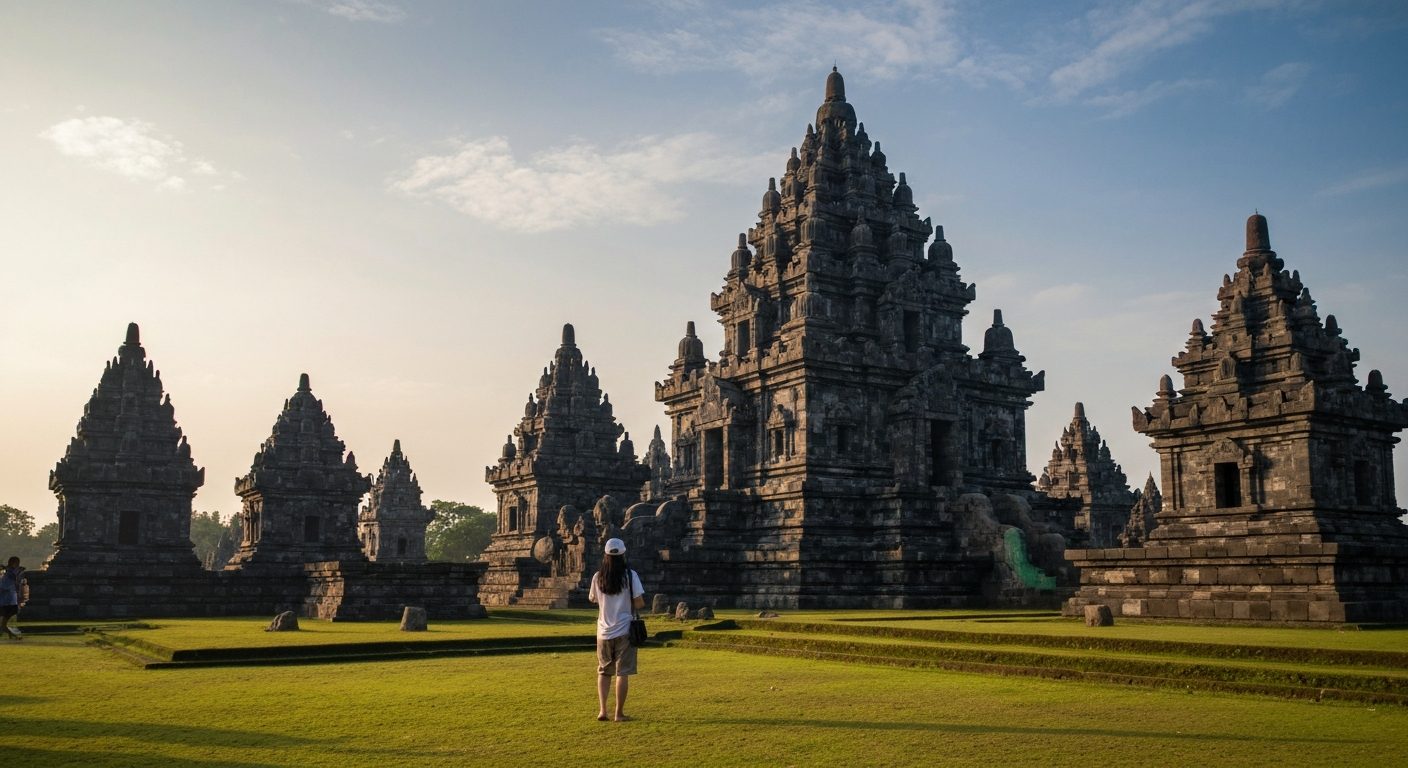
What to do in Yogyakarta is more than just ticking off Borobudur and Prambanan. It’s choosing how to weave temples, volcano views, the Kraton court life and everyday kampung scenes into a few slow, well-planned days.
As someone who has walked these routes for years, this Yogyakarta travel guide is my attempt to answer the question honestly: which places to visit in Yogyakarta are truly worth your time, how to combine the famous sights with quieter local corners, and how much time and budget to allow.
—
Yogyakarta at a glance: how the city “works” for visitors
Think of Jogja (the local nickname for Yogyakarta) in four rings:
- The Palace City – Kraton, Taman Sari, Malioboro, Kotagede
- The Temple Belt – Prambanan to the east, Borobudur to the northwest (in Central Java province)
- The Volcano Slopes – Merapi’s southern flank and lava fields
- The Villages & Coast – batik and craft villages, plus beaches and caves further south and east
Most things to do Yogyakarta Indonesia can be reached in 30–90 minutes by car from the city. Traffic is usually slow but predictable. For planning:
- 2 full days – City + Prambanan + Merapi
- 3 full days – Add Borobudur day trip
- 4–5 days – Add beaches, caves or more village time
From our side at Bali Premium Trip, trips are usually 3–5 days in Jogja, often combined with Bali. Indicative budgets for a private trip (hotel separate): around US$450–900 per person for 3 days with car, driver, licensed guide and main entrance fees (varies strongly by group size, hotel level and season; last verified June 2026).
—
Highlights vs local experiences: quick comparison
Below is a simple comparison of core Yogyakarta highlights tours and quieter, more local experiences. This is not a ranking. It’s here to help you decide what fits your days and energy.
| Experience | Type | Time needed | Best for | Good pairings |
|---|---|---|---|---|
| Prambanan Temple | Headline highlight | 2–3 hours | First-time visitors, history lovers, sunset photography | Ramayana Ballet, Ratu Boko sunset, Malioboro at night |
| Borobudur Day Trip | Headline highlight | Half to full day | Architecture, Buddhist heritage, families | Village cycling, Mendut & Pawon temples |
| Kraton & Taman Sari | City cultural core | 3–4 hours | Court culture, gamelan, easier half-day | Kotagede silver & batik, Malioboro |
| Merapi Lava Jeep | Adventure highlight | 2–3 hours (plus 1 hr drive each way) | Teens, groups, active couples | Prambanan, Kaliurang lunch, coffee farm |
| Batik Village Walk | Local experience | 2–3 hours | Hands-on craft, slow travel | Kotagede, Kraton, Taman Sari |
| Kampung photo walk near Taman Sari | Local experience | 1.5–2 hours | Street photography, “real Jogja” feel | Taman Sari, local lunch, coffee stall |
| Timang or southern beaches | Scenic day out | Full day | Sea views, mixed-age groups | Cave tubing, rural food stops |
| Night food tour | Local experience | 3–4 hours (evening) | Food-focused travellers, social groups | Free day, light daytime program |
If you’d like help turning this into a real route with timings and transfers, you can always plan your trip with our Bali Premium Trip reservations team over email or WhatsApp.
—
1. Prambanan: Hindu temple complex & the best sunset in Jogja
Prambanan is the most important of the places to visit in Yogyakarta for anyone interested in Javanese Hindu heritage. On the ground, it feels much more compact than Borobudur, yet the central Shiva temple rises nearly 47 metres and still dominates the plain.
Why Prambanan matters
- Largest Hindu temple complex in Indonesia
- Built around the 9th century, linked to the Sanjaya dynasty
- Rich Ramayana and Shiva imagery carved into the main temples
For many photographers, this is among the best photo spots Yogyakarta Prambanan sunset can offer. Light falls on the west-facing reliefs, and on a clear day you may see Merapi’s outline behind the spires.
Practical tips
- Location & travel time: About 16 km east of central Jogja; usually 30–45 minutes by car.
- Time needed: 2–3 hours inside the compound if you walk slowly and read the relief stories.
- Tickets: International visitor tickets are sold in IDR and tiered by age. Last verified June 2026, expect roughly US$25–30 per adult for Prambanan alone; combination options with Borobudur change from time to time.
- Best time:
- Late afternoon into sunset for photos
- Morning (08.00–10.00) for cooler, quieter conditions
We usually suggest a Prambanan sunset tour combined with either the Ramayana Ballet or a short stop at Ratu Boko hill for a different angle on the same plain.
—
2. Borobudur day trip: the Central Java icon
Borobudur is technically in Magelang, Central Java, but it is the other half of most Central Java tours highlights from Yogyakarta. More than a thousand relief panels encircle its terraces, with 72 lattice stupas on the upper levels.
Visiting Borobudur now (rules change)
Access rules have changed several times since the pandemic period, especially for climbing to the top levels. As of mid‑2026:
- Visitors pay a park entry ticket
- Access to the upper terraces may require a timed slot and separate quota-limited ticket, sometimes with mandatory guide and fabric footwear covers
- Numbers and exact conditions can shift based on conservation needs
From a planning perspective:
- Travel time from Yogyakarta: Around 40 km, usually 70–90 minutes by car.
- Time needed: 2–3 hours for the main temple and nearby Mendut and Pawon if you are not rushing.
- Indicative cost: Combined Borobudur + Prambanan international tickets for adults are typically in the US$45–60 range last verified June 2026, varying by the type of access you choose.
For many guests, Borobudur is best in the early morning. Not only for softer light, but also for a quieter atmosphere when the local school groups have not yet arrived.
Pairing Borobudur with local life
On the way back, you can:
- Cycle or ride an andong (horse cart) through the surrounding rice fields
- Visit a small tofu or palm sugar producer
- Stop at a riverside spot for a simple lunch
Our private Borobudur day trips usually combine at least one of these so it isn’t “two hours, photos, back to the car”.
—
3. Kraton, Taman Sari and old Jogja: the living city
Inside the old city walls, Yogyakarta still lives as a palace town. The Kraton (palace) and Taman Sari (former royal gardens) are the best starting points for a Yogyakarta highlights tour focused on culture and architecture.
Kraton Yogyakarta
The Kraton is not a museum that closes at 17.00 and empties out. It is the Sultan’s residence and a centre of Javanese ceremony. Inside you’ll find pendopo halls, heirloom displays and, if you time it right, live performances.
- Performances: Gamelan, wayang kulit, dance or classical Javanese singing on set days (usually late morning).
- Time needed: 1.5–2 hours for the main Kraton visit, more if you stop to listen to the music.
- Dress & manners: Shoulders covered, comfortable long trousers or skirts are appreciated. Speak softly; some courtyards feel more like a family compound than a museum.
Taman Sari: not just the Instagram pools
Many online posts list “Yogyakarta instagrammable spots Taman Sari” and stop at one picture of the bathing pools. That angle is lovely, but you miss most of the story if you only come for five quick photos.
Taman Sari is:
- The old royal water garden and pleasure retreat
- A mix of pools, underground passages, former meditation areas and mosque
- Now also surrounded by a kampung whose residents have added murals and small homestays
Some of the best angles are in the lanes outside the ticketed zone: colourful walls, children playing, glimpses into batik workshops. This is where we often do a short kampung photo walk. You get daily-life images that feel less staged.
How to visit
- Getting there: Both Kraton and Taman Sari are in the old city; about 15–25 minutes by car from most hotels, depending on traffic. Many people stay within walking distance.
- Time needed together: 3–4 hours with an easy coffee break.
- Good pairings:
- Kotagede silver workshops and traditional houses
- A short Yogyakarta batik village tour in a nearby kampung
—
4. Merapi lava jeep: ash fields and village stories
Merapi is Indonesia’s most active volcano. Jogja lives with it, not beneath it. The Merapi lava jeep routes on the southern slope give a clear view of this relationship: ruined houses, relocated villages, and people who have rebuilt several times.
What the lava jeep experience feels like
You ride in a WWII-style open jeep along off-road tracks, stopping at:
- Simple museums in former homes buried by eruptions
- Viewpoints facing Merapi’s summit (visibility varies with weather)
- Riverbeds etched by cold lava flows
It’s mildly bumpy rather than extreme. Most guests in reasonable health, including children over about 7–8 years, manage it fine.
Practicalities
- Travel time from city: Around 25–30 km north, usually 60–75 minutes by car.
- Jeep tour duration:
- Short route: 1–1.5 hours
- Medium: 2 hours
- Longer combinations: up to 3 hours
- Capacity: Usually 3–4 guests per jeep plus driver.
- Indicative cost: For the jeep itself (not including city transfers), expect around US$25–45 per jeep for standard routes last verified June 2026.
Morning often has clearer views; late afternoon has softer light. We usually pair Merapi with Prambanan in a single day for guests short on time, or keep it as a separate half-day with a long lunch in Kaliurang for those moving slower.
For a custom Merapi and Prambanan day that matches your pace, you can plan your trip with us; our team coordinates licensed jeeps and local guides directly with operators on the mountain.
—
5. Batik villages and craft traditions: Jogja’s quieter side
On paper, “batik village” can sound like a quick shopping stop. In practice, if you go to the right kampung with the right person, it’s one of the most grounded things to do in Jogja.
What a batik village visit includes
A typical Yogyakarta batik village tour with us might involve:
- Short walk through lanes where cloth is drying and patterns are drawn on porches
- Demonstration of batik tulis (hand-drawn) and batik cap (stamped)
- Optional hands-on session where you draw a small motif on cloth and try waxing and dyeing
- Time in a family workshop where you can buy, or not buy, pieces at clear prices
Batik is slow. Some pieces take weeks or months. Seeing that rhythm is as important as buying a shirt.
Other crafts nearby
Depending on your interests and time we can combine batik with:
- Kotagede silver workshops and old joglo houses
- Traditional puppet-makers or kris (ceremonial dagger) craftsmen
- Basic gamelan or Javanese dance introduction for children
These are not packaged shows. They are working spaces where you step in for an hour or two, with a guide who can translate politely.
—
6. Malioboro, Alun‑Alun and night food: Jogja after dark
No Yogyakarta travel guide would be complete without Malioboro Street. It’s busy, sometimes crowded, full of street vendors and souvenir stalls. For many, one evening is enough; for others, the mix of buskers, snacks and people-watching is exactly the right level of energy.
Malioboro and Alun‑Alun
- Malioboro: Good for cloth, casual batik, shoes, sandals, basic souvenirs. You bargain, but prices are often already reasonable.
- Alun‑Alun Kidul (southern square): Family scene after dark with colourful pedal cars, snacks, and the often-photographed twin banyan trees. Light-hearted, a bit noisy, fun for children.
Night food experiences
Jogja’s food is mild, slightly sweet and comforting. A simple night food tour might include:
- Gudeg – young jackfruit stew with rice and side dishes
- Sate klathak – goat satay grilled on iron skewers near Imogiri, for those who want to go a bit further
- Angkringan – tiny roadside stalls with rice, skewers, tea and coffee; very local, very casual
- Wedang ronde or wedang uwuh – warm ginger-based drinks for the evening
You can explore solo or with a guide who knows which stalls handle hygiene carefully, which helps if you’re travelling with children or parents.
—
7. Photography & “Instagram spots” beyond the usual angles
Yogyakarta has many instagrammable spots that go beyond the standard Taman Sari stairwell photo.
Classic temple angles
- Prambanan sunset – From the western side of the main courtyard, frame the central Shiva temple with Merapi (if visible) glowing behind. Arrive by 15.30–16.00 to walk and scout locations.
- Borobudur reliefs – Instead of only shooting the upper stupas, spend time on the narrative panels along the lower galleries. Short focal lengths work well in the narrow corridors.
City & kampung angles
- Taman Sari lanes – Early morning, when laundry is out and light hits the pastel walls. Ask before photographing people closely; a quick “monggo” and smile go a long way.
- Kampung Code or other riverside communities – With a guide who knows the area, you can find angles of painted houses and riverbanks that feel very different from the palace courtyards.
Volcano & countryside
- Merapi jeep viewpoints – Wider lenses for the landscape, but keep an eye on details: a shrine half-buried in ash, or a motorbike under a damaged roof.
- Rice fields near Borobudur – Late afternoon cycling with terraced paddies and farmers returning home.
For serious photographers, we can arrange very early departures, extra photo stops and local assistants who understand both light and local etiquette.
—
8. Southern coasts, caves and day trips beyond the city
If you have 4–5 days in the region, consider adding one full day toward the south or east.
Gunungkidul beaches
The limestone coast of Gunungkidul has many coves and lookouts. Popular names change on social media, but the pattern is similar:
- Scenic cliff views
- Local seafood warung for lunch
- Some beaches swimmable in calm conditions; others are more for walking and views
Travel time can be 2–3 hours each way, so this is a full day.
Caves and rivers
You’ll see plenty of offers for cave tubing or cave abseiling. These can be good add-ons for active travellers who have already covered the main temple and city sites.
As with any outdoor activity, conditions and queues vary by season and weekend/weekday. Our role at Bali Premium Trip is to book through licensed local operators we know, build in realistic transfer times, and be clear about effort level (wet, dark, ladders, etc.) so you can judge suitability for your group.
—
9. How many days in Yogyakarta, and sample combinations
Here are some simple patterns we’ve seen work well for first-time visitors.
2 full days (short stay)
- Day 1 – Kraton, Taman Sari, batik village, Malioboro evening
- Day 2 – Merapi lava jeep (morning), Prambanan + Ramayana Ballet (afternoon–evening)
3 full days (classic)
- Day 1 – Kraton, Taman Sari, Kotagede or batik village
- Day 2 – Borobudur day trip with village cycling or andong ride
- Day 3 – Merapi lava jeep + Prambanan sunset and short city night food walk
4–5 full days (unhurried)
Add:
- One day to the southern coast or cave activities
- More time in villages, workshops, or simply free afternoons at your hotel
We usually plan private Yogyakarta programs as part of a broader Indonesia trip, so transport and hotel category matter. Indicatively, private-guided Yogyakarta sections with us fall in the range of US$150–300 per person per day (car, driver, guide and core entrance fees; based on 2–4 guests, last verified June 2026). Larger groups pay less per head, solo travellers more.
For an exact plan that matches your pace and your next destinations, you can plan your trip with our Bali Premium Trip team; they handle everything directly with our own drivers and vetted local guides.
—
10. Practical notes: seasons, etiquette and logistics
Weather and seasons
- Jogja is warm and humid year‑round.
- Rough guide:
- Drier months: roughly May–September
- Wetter months: roughly November–March
- Showers can appear any month, often mid‑afternoon. Early starts help you avoid both heat and rain.
We can’t promise clear volcano views or perfect sunsets, but we can time your main outdoor visits for morning or late afternoon when light and temperature are usually kinder.
Getting around
- Airport: Yogyakarta International Airport (YIA) sits about 40–45 km from the city; drive times commonly run 60–90 minutes.
- Around town: Private car with driver is the easiest for linking several sites per day, especially with older family members or children.
- Trains: Good for connecting to Solo (Surakarta) or further east/west in Java.
Dress and behaviour
- Temples: Shoulders covered, skirts or trousers to the knee or below. Sarongs are often available for rent or loan.
- Palace and kampung: Dress modestly, ask before photographing people closely, avoid loud voices in palace courtyards and religious spaces.
- Shoes: Easy-on/easy-off shoes help with repeated temple and mosque entries.
—
FAQs
How many days do I need in Yogyakarta?
For most first-time visitors, 3 full days is a good starting point: one for the Kraton and city area, one for Borobudur, and one for Prambanan plus Merapi. With 4–5 days you can add beaches, caves or more village time without feeling rushed.
Is Borobudur or Prambanan better to visit first?
If your schedule allows, visit Prambanan first, as it’s closer to the city and gives a clear introduction to Javanese temple architecture. Then spend a full or half day on Borobudur with more context and time for the surrounding villages.
Can children enjoy a Yogyakarta trip?
Yes. Children usually enjoy the open spaces at Borobudur and Prambanan, the Merapi jeep ride, and hands-on batik or wayang (puppet) sessions. We simply adjust daily pacing, include more snack and rest stops, and avoid the hottest hours for temple climbs.
What is the best time of year to visit Yogyakarta?
Generally, May to September has less rain and is more comfortable for outdoor visits, though it can be hotter and busier. The wetter months from November to March still work with early starts and flexible planning; showers are common but often not all-day events.
How do I book a private Yogyakarta highlights tour with you?
You can contact our Bali Premium Trip reservations team via the plan your trip page and WhatsApp. They will suggest routes and costs based on your dates, group size and interests, then arrange cars, licensed guides, temple tickets and local operators directly at transparent, published rates.